
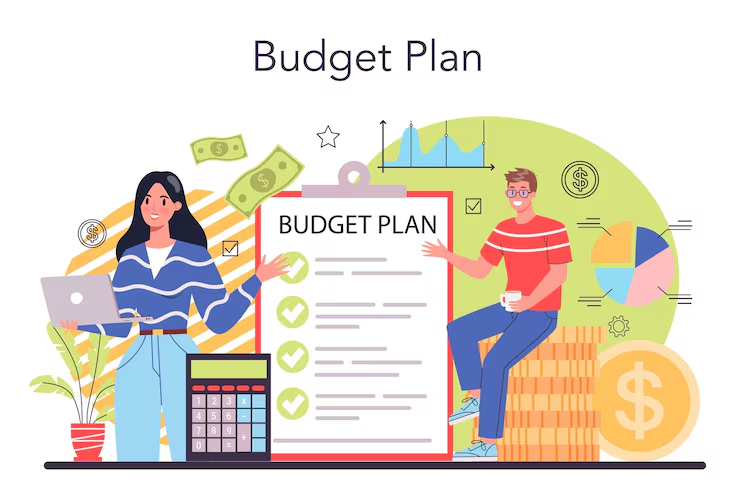
Understanding the Basics of Budgeting on a Fixed Income
A solid retirement budget starts with tracking your net income after taxes and deductions. Factor in any part-time work or side gigs if applicable, but remember the “fixed” aspect means minimal flexibility for increases. Inflation can erode purchasing power over time, so your budget should account for rising costs in essentials like healthcare and groceries.
## Strategy 1: Track Your Income and Expenses Meticulously
The foundation of any effective budget is awareness. Begin by listing all income sources and their monthly amounts. For example:
– Social Security: $1,500
– Pension: $800
– Investment withdrawals: $600
Total: $2,900
Next, categorize expenses into fixed (e.g., rent/mortgage, utilities) and variable (e.g., groceries, entertainment). Use free tools like spreadsheets, apps (Mint or YNAB), or even a simple notebook to log spending for 1-3 months. This reveals patterns—perhaps dining out costs more than expected.
**Pro Tip for Retirement Budgeting:** Review your tracking quarterly. Adjust for seasonal changes, like higher heating bills in winter, to maintain balance on your fixed income.
## Strategy 2: Adopt the 50/30/20 Rule Adapted for Retirees
The classic 50/30/20 budgeting rule—50% on needs, 30% on wants, 20% on savings/debt—can be tweaked for retirement. Since savings might shift to preservation, consider 60/30/10: 60% essentials, 30% discretionary, 10% emergency fund or healthcare reserves.
– **Needs (60%)**: Housing, food, transportation, insurance, and medical costs. Prioritize these to avoid shortfalls.
– **Wants (30%)**: Travel, hobbies, gifts. Enjoy life, but scale back if needed.
– **Savings/Debt (10%)**: Build a buffer for unexpected expenses or pay down lingering debts like credit cards.
This framework ensures your fixed income covers necessities first, reducing stress and promoting financial security in retirement.
## Strategy 3: Prioritize Debt Reduction and Emergency Savings
High-interest debt can devour a fixed income. Aim to eliminate credit card balances or loans early in retirement. Strategies include the debt snowball method (pay smallest debts first for motivation) or avalanche (tackle highest interest rates).Simultaneously, build an emergency fund covering 3-6 months of expenses. Stash it in a high-yield savings account for easy access without penalties.
For retirees, this fund is vital for covering surprises like home repairs or medical bills, preventing dips into retirement accounts that could trigger taxes or fees.
## Strategy 4: Plan for Healthcare and Long-Term Costs
Healthcare is often the largest expense in retirement. Budgeting on a fixed income requires allocating 15-20% of your budget here. Medicare covers basics, but supplements (Medigap) or Part D for prescriptions add costs.
– Estimate annual out-of-pocket expenses using tools from Medicare.gov.
– Consider Health Savings Accounts (HSAs) if eligible pre-retirement for tax-free medical spending.
– Factor in long-term care insurance or set aside funds for potential nursing home needs.
By anticipating these, you avoid derailing your retirement budget with unforeseen health issues.
Stretch your fixed income by optimizing earnings and cutting costs creatively.
– **Boost Income**: Delay Social Security claims until age 70 for higher benefits (up to 8% annual increase). Explore reverse mortgages or renting out space if you own your home.
– **Cut Expenses**: Downsize your living situation—move to a smaller home or lower-cost area. Shop smart: Use senior discounts, buy generics, and meal plan to reduce grocery bills. Energy-efficient upgrades can lower utilities.
Lifestyle adjustments, like community activities over paid entertainment, keep life fulfilling without overspending.
Inflation averages 2-3% yearly, eroding fixed income value. Combat this by:
– Investing a portion of savings in inflation-protected assets like TIPS (Treasury Inflation-Protected Securities) or diversified stocks.
– Adjusting your budget annually: Increase allocations for rising costs based on CPI (Consumer Price Index) data.
– Use variable withdrawals from investments (e.g., 4% rule) to allow for growth.
Regular reviews ensure your retirement budget remains realistic and adaptable.
Modern tools simplify budgeting on a fixed income. Apps like PocketGuard automate tracking, while online communities (e.g., Reddit’s r/personalfinance or AARP forums) offer retiree-specific advice.
Seek free resources: Local senior centers provide budgeting workshops, and government programs like SNAP or LIHEAP assist with food and energy costs if income qualifies.
### Conclusion: Empower Your Retirement with Smart Budgeting
Budgeting on a fixed income in retirement doesn’t mean sacrificing joy—it’s about intentional choices for long-term security. By tracking expenses, prioritizing needs, reducing debt, and planning for the future, you can thrive on a limited budget. Start small: Create your first budget today and refine it over time.

Ready for a fresh start?
FREE Medicare Review with a Licensed Agent
Related Articles
No Results Found
The page you requested could not be found. Try refining your search, or use the navigation above to locate the post.
Stay Up to Date With The Latest News & Updates
Subscribe to Our Newsletter
© 2025 dailyseekadvantage.com
All Rights Reserved. | Privacy Policy | Terms and Conditions
This website is owned and operated by Medigap Life, LLC, a licensed insurance agency. Callers will be directed to a licensed insurance agent.
Invitations for applications for insurance on seekadvantage.com are made through Medigap Life, LLC, only where licensed and appointed. Medigap Life is a wholly owned subsidiary of Medigap Life, LLC. Medigap Life is a licensed insurance agency of Medicare Advantage HMO, PPO and PPFS organizations and prescription drug plans with a Medicare contract. Enrollment in any plan depends on contract renewal. We do not offer every plan available in your area. Any information we provide is limited to those plans we do offer in your area. Please contact Medicare.gov or 1-800-MEDICARE to get information on all of your options.
This site is not connected with or endorsed by the U.S. Government or the federal Medicare program.
Enrollment in the described plan type may be limited to certain times of the year unless you qualify for a Special Enrollment Period.